
Never Think About Dinner Again: How AI Meal Planning Eliminates Decision Fatigue
By ThisWeekEats Team
January 15, 2025
7 min read
Never Think About Dinner Again: How AI Meal Planning Eliminates Decision Fatigue
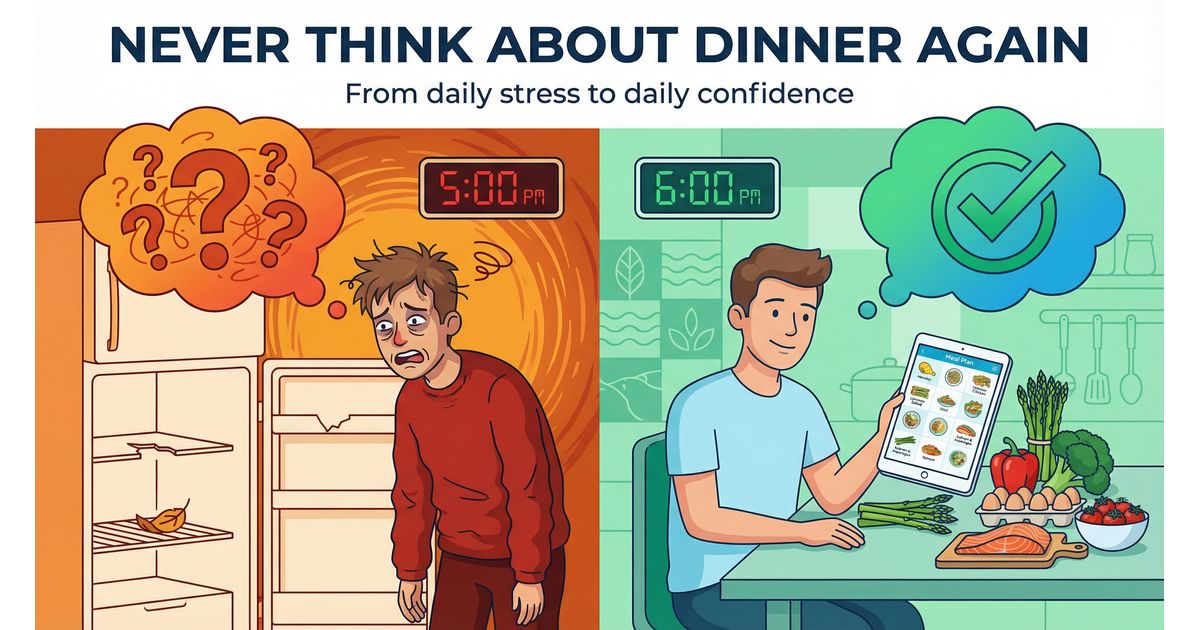
The clock strikes 4:30 PM. You're wrapping up work, and suddenly the familiar dread sets in: What's for dinner?
You mentally scan your refrigerator's contents. Is there still chicken from Tuesday? What vegetables are left? Do you have time to thaw something? Should you just order takeout... again?
This daily ritual isn't just annoying—it's decision fatigue, and it's stealing your time, energy, and money.
The Hidden Cost of Daily Meal Decisions
Every day, you're making dozens of micro-decisions about food:
- What should we eat tonight?
- Do I have the ingredients?
- Will everyone in the family eat this?
- Is this nutritious enough?
- How long will it take to prepare?
- What about leftovers for lunch tomorrow?
Research shows that adults make over 200 food-related decisions each day. That's 200 opportunities for stress, second-guessing, and mental exhaustion.
For busy families, this compounds into a weekly nightmare:
- Planning: 1-2 hours browsing recipes, Pinterest boards, or meal planning apps
- Shopping: Multiple grocery trips because you forgot ingredients
- Adjusting: Last-minute changes when someone doesn't like what you planned
- Repeating: Falling back on the same 5-7 meals because it's easier than thinking
The result? You're either eating the same boring rotation of "safe" meals, or you're ordering expensive takeout when decision paralysis hits.
What If You Never Had to Think About It?
Imagine this instead:
Sunday morning: You open your phone. A complete week of meals is already planned—breakfast, lunch, and dinner. Every meal is personalized to your family's preferences. Everyone's dietary needs are accounted for. The recipes are appropriately challenging for your cooking skill level and fit within your budget.
Sunday afternoon: You tap "Generate Shopping List." Within seconds, you have a comprehensive, categorized grocery list. Everything you need, nothing you don't. One trip. Done.
Monday through Sunday: Each evening, you open the app and see exactly what to make. The recipe is already scaled for your family size. Instructions are clear. No thinking required. Just cook, eat, enjoy.
Zero mental load. Zero planning stress. Zero "what's for dinner?" panic.
This isn't a fantasy—it's how AI-powered meal planning works.
How AI Eliminates the Thinking
Traditional meal planning requires you to do the heavy cognitive work:
- Remember everyone's preferences and restrictions
- Balance nutrition across the week
- Ensure adequate variety
- Avoid repeating proteins too frequently
- Stay within budget
- Match recipes to your cooking skills
- Coordinate who's eating which meals
- Generate a shopping list
That's a lot of mental processing—no wonder it feels exhausting.
AI meal planning flips this model entirely. Instead of you thinking through all these variables, the system handles them automatically:
1. Learns Your Family's Preferences
You set up your family profile once. Tell the system:
- Who's in your family
- What each person loves, likes, or avoids
- Any food allergies (with 5-layer safety protection)
- Weekly eating schedule (who's home for which meals)
- Budget preferences
- Cooking skill level
That's it. You never enter this information again. The AI remembers everything.
2. Generates Intelligent Meal Plans
When you request a meal plan, the AI doesn't just randomly pick recipes. It:
- Prioritizes favorites first: Starts with foods your family loves
- Balances variety: Automatically rotates proteins, grains, and vegetables
- Respects schedules: Only plans meals for people who'll be home
- Matches your budget: Selects recipes within your price range
- Fits your skills: Adapts complexity to your cooking comfort level
- Ensures nutrition: Follows evidence-based macronutrient guidelines (Harvard, Mayo Clinic, NIH)
The result? A week of meals that feels personalized because it is.
3. Creates Shopping Lists Automatically
No more scribbling ingredient lists or forgetting items. The AI:
- Compiles every ingredient from your meal plan
- Organizes by grocery store section (produce, dairy, meat, pantry)
- Consolidates duplicates (if three recipes need onions, it combines them)
- Lets you check off items as you shop
One tap. One list. One shopping trip.
4. Adapts Based on Feedback
Here's where it gets even better: the system learns from your ratings.
After you make a meal, you can rate it:
- Love it: The AI schedules it more frequently
- Like it: Stays in rotation
- Neutral: Used occasionally
- Avoid: Reduced frequency
- Never again: Removed from future plans
The more you use it, the smarter it gets. Your meal plans become increasingly aligned with your actual preferences—not what you thought you'd like, but what you actually enjoy eating.
Real-World Impact: Time, Variety, and Health
Time Savings
- No more recipe searching: 1-2 hours saved weekly
- No more shopping list creation: 30 minutes saved weekly
- No more "what's for dinner?" debates: 15-20 minutes saved daily
- Fewer grocery trips: Save 30-60 minutes weekly (plus gas/transportation costs)
Total time saved: 3-5 hours per week. That's over 200 hours per year—more than a full work week.
Variety Without Effort
One of the biggest traps of traditional meal planning is falling into a rut. You make the same chicken recipe, the same pasta dish, the same tacos—because it's easier than figuring out something new.
AI meal planning solves this by:
- Drawing from recipe pools of 15-60+ dinners, 5-25 lunches, 3-15 breakfasts
- Automatically rotating recipes to prevent repetition
- Ensuring protein variety (not chicken every night)
- Introducing new cuisines at your comfort level (conservative, moderate, or adventurous)
You get variety without effort—the best of both worlds.
Better Nutrition
When you're exhausted from decision-making, nutritious eating is often the first casualty. It's easier to order pizza or make mac and cheese than to plan a balanced meal.
AI meal planning removes this barrier by:
- Ensuring balanced macronutrients (carbs 45-65%, fat 20-35%, protein 10-30%)
- Distributing calories appropriately (25% breakfast, 30% lunch, 35% dinner, 10% snacks)
- Including diverse vegetables, fruits, grains, and proteins
- Following evidence-based nutrition guidelines from Harvard School of Public Health, Mayo Clinic, and NIH
You eat better because the system makes it the default, not the exception.
Reduced Food Waste
How many times have you bought ingredients for a recipe, then changed your mind about cooking it? Or forgotten about produce until it spoiled?
AI meal planning reduces waste by:
- Shopping lists tied to actual planned meals (you only buy what you'll use)
- Smart leftover planning (intentionally cooking extra for tomorrow's lunch)
- Ingredient coordination (multiple recipes use the same vegetables to avoid waste)
Less waste = less guilt + more money saved.
The Mental Freedom Factor
Beyond the tangible benefits, there's something profound about never having to think about dinner:
- More mental energy for what matters: Your kids' homework, work projects, hobbies, relationships
- Less mealtime anxiety: No more 5 PM panic or family disagreements
- Reduced relationship friction: Eliminate the "I don't know, what do you want?" loop
- Increased cooking confidence: Clear instructions and appropriate challenge level
- Freedom to be spontaneous: Want to go out instead? Fine. The plan is there when you need it.
Dinner becomes something you do, not something you stress about.
How to Get Started
If you're ready to eliminate meal planning from your mental load:
-
Set up your family profile (15 minutes)
- Add family members
- Rate food preferences
- Enter dietary restrictions, allergies, and weekly schedule
-
Generate your first meal plan (30 seconds)
- Select the week you're planning for
- Let the AI create a personalized plan
-
Review and adjust (5 minutes)
- Swap out any meals that don't appeal
- Generate a shopping list
-
Shop and cook (as usual)
- One shopping trip with your organized list
- Follow clear, step-by-step recipes
-
Rate your meals (30 seconds per meal)
- Help the system learn your preferences
- Watch your plans get better every week
Total time investment: ~20 minutes to set up, then less than 5 minutes per week ongoing.
The Bottom Line
You have a finite amount of mental energy each day. Spending it on repetitive meal decisions is neither necessary nor enjoyable.
AI meal planning doesn't just save time—it restores mental freedom. It turns meal planning from a daily burden into a background process that handles itself.
Variety. Health. Speed. Zero thinking.
That's the promise. And it's one that thousands of families are already experiencing.
Ready to Stop Thinking About Dinner?
Try ThisWeekEats free for 7 days. Set up your family profile, generate your first meal plan, and experience what it's like to never think about dinner again.
Medical Disclaimer
This article provides general information about meal planning and nutrition. The dietary recommendations are based on guidelines from reputable sources including Harvard School of Public Health, Mayo Clinic, and the National Institutes of Health. However, individual nutritional needs vary based on age, health conditions, activity level, and other factors. Always consult with a registered dietitian, physician, or other qualified healthcare professional before making significant changes to your diet, especially if you have existing health conditions, food allergies, or specific dietary requirements.
Ready to Experience AI Meal Planning?
Try ThisWeekEats free for 7 days. No credit card required.
Start Your Free Trial